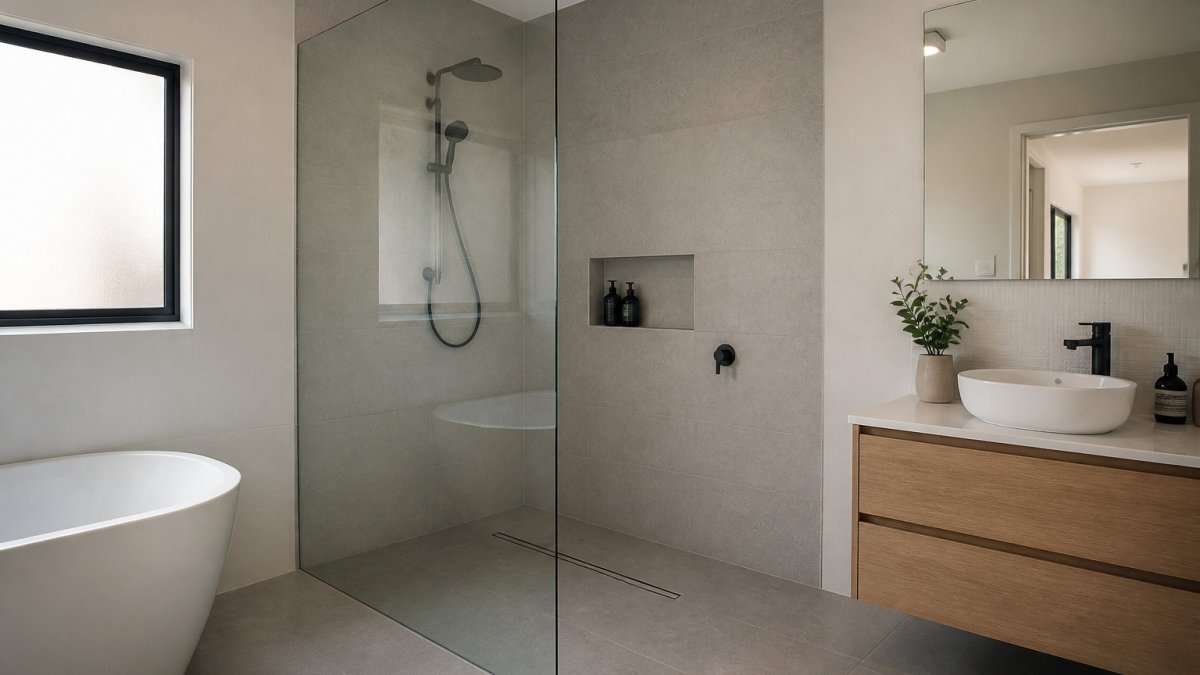
7 Benefits of Frameless Shower Screens for Your Bathroom
Quick Summary
Frameless shower screens are glass enclosures with no metal frame around their edges, giving a clean, open look. They are held in place by hinges, clamps and wall fixings, and typically use 8mm or 10mm tempered safety glass. Their main benefits are visual space and easier day-to-day cleaning.
- Frameless screens use 8mm or 10mm tempered safety glass in Australian installations.
- Removing the frame gives the most visual space and the least surface to clean.
- A quick squeegee after each shower handles most cleaning, with a weekly wipe using non-abrasive glass cleaner.
- Ask whether any coating is factory-applied, since aftermarket products vary widely in durability.
- Specify 316-grade stainless steel or solid brass hardware, especially in coastal areas with salt-laden air.
Table of Contents
- What Is a Frameless Shower Screen?
- Frameless vs Semi-Frameless vs Framed Shower Screens
- Aesthetic Gains and How Frameless Screens Change Bathroom Space
- Easier Cleaning and Maintenance Day to Day
- Glass Thickness, Coatings and Hardware Finishes That Affect Longevity
- Frameless Shower Screen Installation: What Is Involved
- Frameless Shower Screen Pros and Cons, and Costs to Budget For
- Booking Your Frameless Shower Screen Quote
- Frequently Asked Questions
What Is a Frameless Shower Screen?
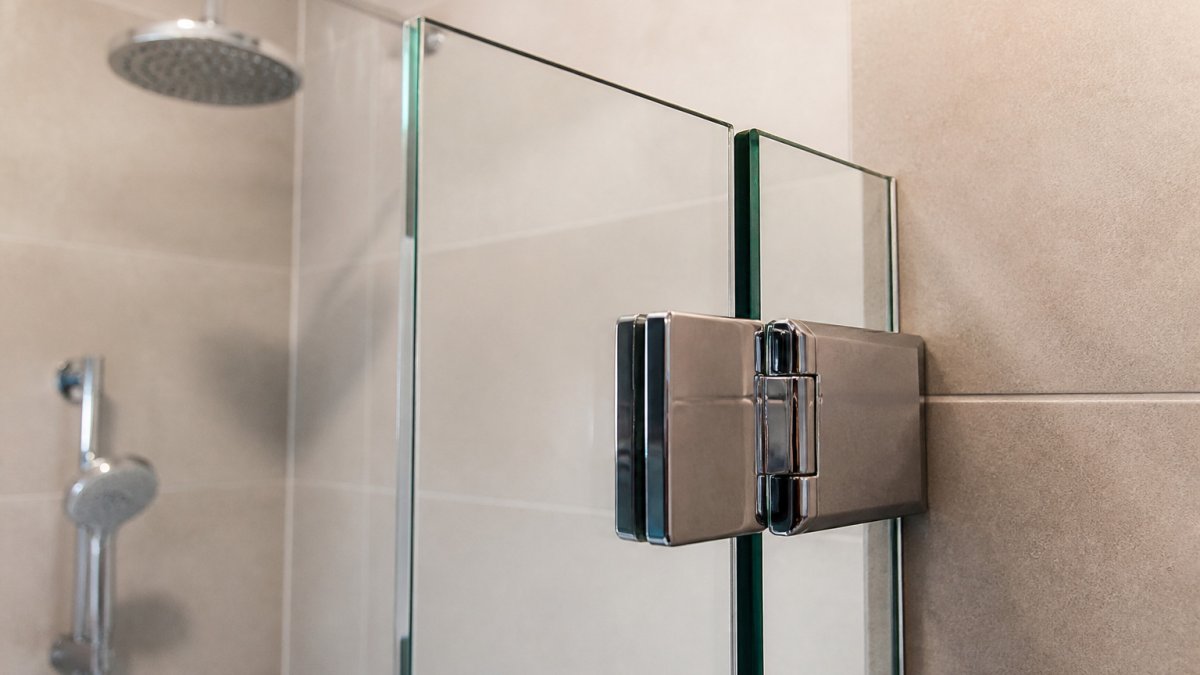
A frameless shower screen is a glass enclosure with no metal frame around its edges, held in place by hinges, clamps and a few fixed points on the wall, which is why frameless shower screens depend so heavily on sound fixings. For a bathroom, that means the glass itself forms the barrier, typically 8mm or 10mm tempered safety glass in Australian installations. The result is a clean, open look.
The glass does the work a frame would otherwise do, so the structure depends on the quality of the glass, the hinges and the wall fixings. This is why the specification matters more than the appearance alone. Mr Glass Services is a family-owned business with over 10 years of industry experience.
Frameless vs Semi-Frameless vs Framed Shower Screens
Framed screens use aluminium or powder-coated channels around the full perimeter of the glass. They are the most forgiving option for uneven walls and the least expensive to produce, but the frame collects soap scum and water spots along its edges.
Semi-frameless screens keep a metal channel along the bottom or top edge and leave the sides and door edge bare. They suit tighter budgets and still offer some of the open look, though the channel needs regular wiping.
Frameless screens remove the perimeter frame altogether. They give the most visual space and the least surface to clean.
Aesthetic Gains and How Frameless Screens Change Bathroom Space
Removing the frame lets light and sightlines move freely through the room. In smaller bathrooms, this makes the space feel larger, because the eye is not stopped by a horizontal or vertical metal line every few centimetres.
Finish choices also matter. Polished chrome is the traditional option, while matte black hardware has become a common choice in contemporary renovations. Hardware should match the tapware and towel rails so the room reads as one design rather than a collection of parts.
Easier Cleaning and Maintenance Day to Day
A frameless screen has far fewer ledges and channels for water and soap to sit in. In practice, this means a quick squeegee after each shower handles most of the job, and a weekly wipe with a non-abrasive glass cleaner keeps the surface clear.
Silicone seals need periodic checking, particularly at the base and wall joins, because a failed seal is the most common cause of water leakage. Hinges and pivot points should also be checked each year for loosening. Watch out: abrasive scouring pads and harsh acid cleaners can damage the glass coating and the hardware finish, so stick to products designed for glass.
Glass Thickness, Coatings and Hardware Finishes That Affect Longevity
Glass thickness affects both strength and how the screen feels when it is opened or closed. Most residential frameless screens use 8mm or 10mm tempered safety glass, which is the standard for structural integrity in a wet area. Tempered glass is heat-treated so that, if it breaks, it crumbles into small blunt fragments rather than sharp shards. In practice, 10mm glass feels more solid and resists flex better on wider panels and doors, while 8mm is common on narrower fixed panels where weight and cost matter. Anything thinner than 8mm is generally not appropriate for a frameless door.
Coatings are worth asking about, and this is where many buyers get caught out. Standard tempered glass is bare; easy-clean or hydrophobic coatings are applied after tempering and change how water and soap scum behave on the surface. A hydrophobic coating makes water bead and run off, so mineral deposits and soap residue have less chance to bond. A photocatalytic or hydrophilic coating works differently, it spreads water into a thin sheet so it dries more evenly and breaks down organic residue in daylight. Neither type is permanent. Most practitioners find the effective life of a factory-applied coating is a few years under daily showering, after which the surface reverts to behaving like bare glass. Coatings slow the build-up; they do not eliminate cleaning. Ask whether the coating is factory-applied or a aftermarket spray, because aftermarket products vary widely in durability.
Hardware finish affects longevity as much as appearance, and the material underneath the finish matters more than the colour. Solid brass or marine-grade stainless steel components resist corrosion far better than cheap plated fittings, which can pit and flake in a humid bathroom. In coastal areas, salt-laden air accelerates corrosion, so 316-grade stainless steel is a common specification for hinges, clamps and handles. Plated zinc or low-grade steel fittings may look identical on day one but often show bubbling or discolouration within a few years. A mould-resistant seal reduces the risk of black spotting along the joins, and a quality door seal also reduces water tracking onto the bathroom floor.
Frameless Shower Screen Installation: What Is Involved
Australian Standard for safety glazing in buildings
Frameless Shower Screen Pros and Cons, and Costs to Budget For
The main advantages are the open look, easier everyday cleaning and the sense of extra space. The main drawbacks are the higher upfront cost, the need for accurate measurement and the greater sensitivity to wall and floor defects.
Please contact Mr Glass Services for current pricing rather than relying on general estimates.
Booking Your Frameless Shower Screen Quote
Mr Glass Services offers a simple three-step process.
If you are renovating a bathroom and want a frameless screen, get a free quote from Mr Glass Services today.
Frequently Asked Questions
What are the key differences between frameless and framed shower doors?
Framed shower doors have aluminium or steel frames around the glass, which hide the edges and often the seals but collect soap scum and grime in the channels. Frameless screens use thick tempered glass with only hinges and a few fixed clips, so there are fewer crevices to clean and a cleaner look. Frameless units usually cost more because the glass must be thicker and cut to exact measurements. Framed doors are cheaper and more forgiving of minor installation variations, which can suit a tight budget or a simple rental bathroom.
Are frameless shower screens easy to clean?
Yes, they are generally easier to clean than framed screens because there are no channels for soap scum and water spots to build up in. A squeegee used after each shower, plus a monthly wipe with a non-abrasive glass cleaner, keeps most screens clear. Hard water areas may need a pH-neutral cleaner to prevent mineral deposits. Coated glass repels water and shows less residue, though it still benefits from regular wiping. Avoid abrasive pads that can scratch the glass surface.
Should a shower screen go all the way to the ceiling?
Not always. Full-height screens are common in modern renovations and help contain water spray, but they can be costly and are not essential in every layout. Many frameless screens stop at a fixed height above the floor and pair well with a tiled splash zone and a waterproofed wall. The right height depends on the shower size, the water pressure and how far the spray travels. A glazier can advise the best option once they have measured your bathroom on site.
Are frameless shower screens worth the extra cost?
For many homeowners they are, particularly when the bathroom is being renovated and the screen will be a visible feature for years. The main benefits are a cleaner look, easier maintenance and a sense of more open space. The trade-offs are higher upfront cost, the need for accurate measurements and the need to keep hardware in good condition. Exact pricing depends on glass thickness, hardware finish and the bathroom layout, so request a written quote from Mr Glass Services for current figures.