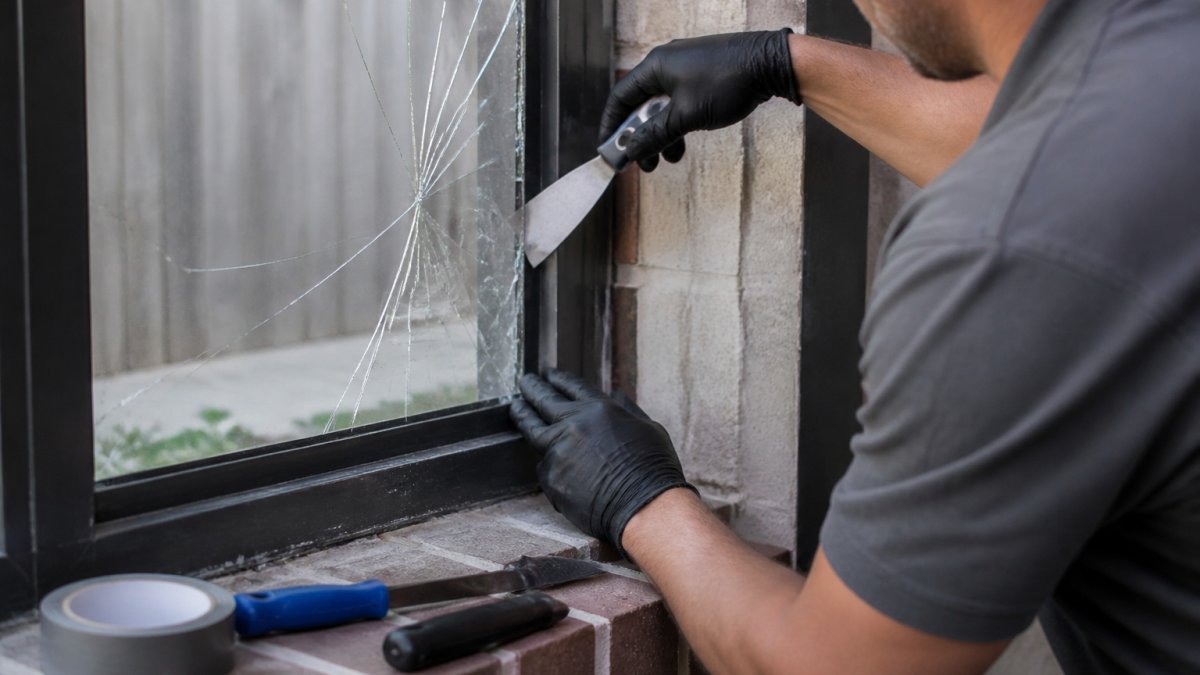
How to Fix Broken Window Glass: Step-by-Step
Table of Contents
- Assess the Type and Extent of Damage to Your Broken Window Glass
- Safety Precautions Before Handling Broken Glass
- How to Temporarily Cover a Broken Window
- Repair or Replace Broken Window Glass: Making the Right Decision
- Removing Broken Glass and Preparing the Window Frame
- Broken Window Pane Replacement: Measuring and Selecting Glass
- Window Glass Replacement Cost and When to Call a Professional
- Installing the Replacement Pane and Sealing
- Frequently Asked Questions
Last Updated: October 16, 2026
Assess the Type and Extent of Damage to Your Broken Window Glass
The first step when you need to fix broken window glass is to assess the damage accurately. A hairline crack behaves differently from a shattered pane, and single-pane windows break differently than double-pane units.
Single-pane versus double-pane windows
Single-pane windows have one layer of glass. They're simpler and cheaper to replace: remove the glass, measure the opening, and install new glass.
Double-pane windows (insulated glass units) have two layers of glass separated by air or gas for energy efficiency. If only the outer pane cracks, you can replace just that pane.
Check your window frame for a gap between two pieces of glass.
Minor cracks versus shattered panes
Minor cracks are thin lines running across the glass, straight or branching.
Shattered panes have glass broken into multiple pieces or missing entirely, exposing the frame. This is an immediate safety and security hazard requiring temporary weatherproofing or full replacement within hours.
If the crack is longer than 30 centimetres, spreads across the pane, or radiates outward like a spider web, replacement is usually the only option, these cracks compromise structural integrity and spread further with temperature changes or vibration.
Safety Precautions Before Handling Broken Glass
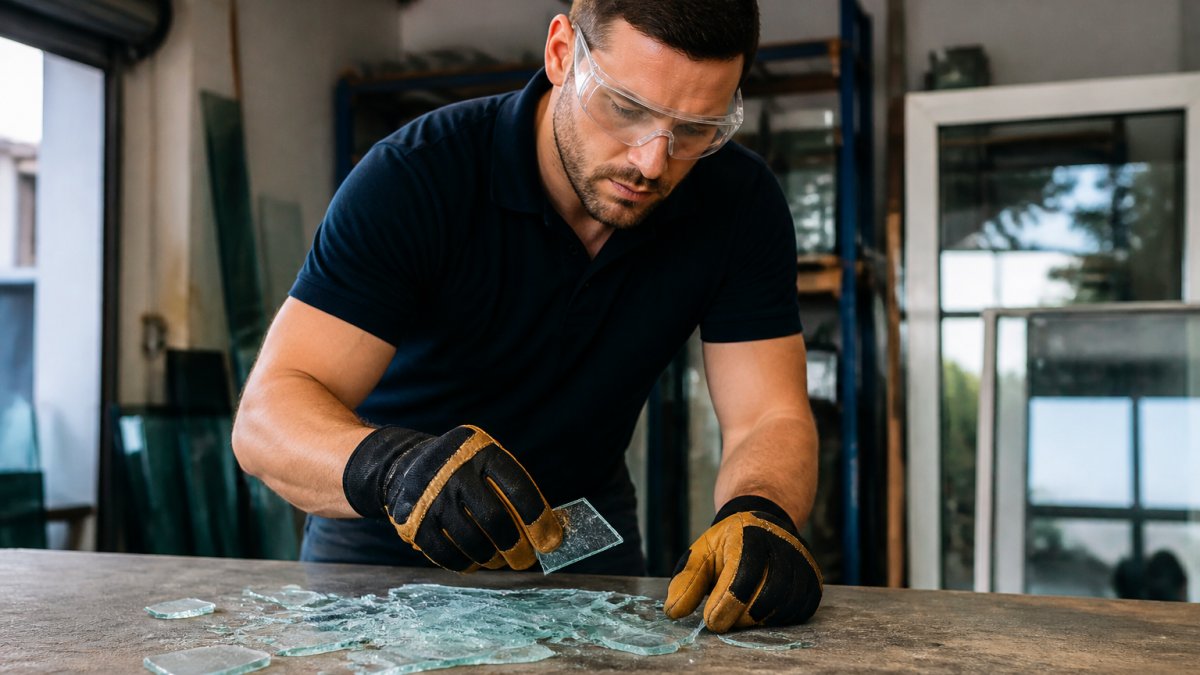
Broken glass is sharp and dangerous. Protect yourself before touching anything, serious cuts, eye injuries, and infections happen quickly when safety is skipped.
Essential PPE and tools
Wear these before handling any broken glass:
- Safety glasses - protect your eyes from flying shards
- Heavy-duty work gloves - thick leather or cut-resistant gloves, not thin latex
- Long sleeves - cover your arms fully
- Closed-toe shoes - protect your feet from falling glass
- Dust mask - wear one when sweeping up small fragments
Gather these tools before you start:
- Utility knife or glass cutter
- Putty knife (for scraping old sealant)
- Hammer (for removing glazing points)
- Suction cups (for handling large glass sheets)
- Drop cloth or plastic sheeting (to catch debris)
- Broom and dustpan
- Damp cloth (to wipe the frame clean)
Broken glass cleanup and disposal
Never leave broken glass scattered. It's a hazard to anyone in the home, especially children and pets.
Sweep up all visible shards immediately with a broom and dustpan, not your hands.
Place all broken glass in a sturdy bag or box, don't overfill it, and seal it tightly.
If glass is embedded in the frame or stuck in old putty, remove it carefully with the putty knife, working slowly.
How to Temporarily Cover a Broken Window
If you can't repair or replace the glass immediately, you need emergency weatherproofing. A broken window exposes your home to weather, pests, and security risks.
Emergency weatherproofing methods
Plywood: Cut plywood to fit the opening and screw it into the window frame.
Cardboard and tape: For small breaks, tape cardboard securely over the opening.
Weatherstripping tape: For small cracks, apply weatherstripping tape around the edges to seal gaps.
Temporary adhesive film: Clear adhesive film holds small pieces together temporarily, reducing drafts and keeping out insects.
The goal is to stop air, water, and pests from entering.
Repair or Replace Broken Window Glass: Making the Right Decision
Some damage can be repaired cheaply; other damage requires full replacement. Knowing which applies saves time and money.
When repair is sufficient
Minor cracks under 30 centimetres can often be repaired by applying clear nail polish or epoxy resin into the crack. This seals it, stops it spreading, and is invisible once dry.
Single cracks in single-pane windows that don't spread can be sealed temporarily, working for 3-6 months while you plan for replacement.
Damaged glazing compound or sealant around the glass edge can be replaced without replacing the glass.
Repair makes sense when:
- The glass is structurally sound
- The crack or damage is small and isolated
- You're buying time before full replacement
- The window is old and replacement isn't urgent
When full replacement is necessary
Shattered or heavily cracked glass needs replacement.
Failed double-pane seals (fogging between panes) require replacing the entire insulated glass unit.
Large cracks longer than 30 centimetres will spread.
Safety concerns make replacement urgent. If children or pets could cut themselves on exposed edges, replace it now.
Energy efficiency matters if your window is old.
Replacement makes sense when:
- The damage is extensive
- The window is old and inefficient
- You're renovating or upgrading
- The glass is safety-critical (doors, low windows)
A quick assessment tells you whether repair or replacement is the right choice.
Removing Broken Glass and Preparing the Window Frame
Once you've decided to fix broken window glass, the next step is removing the old glass and preparing the frame.
Extracting glass shards and glazing points
Start by removing any loose glass. Wear your safety glasses and gloves. Use a putty knife to gently tap around the edges of the glass.
Glazing points are small metal triangles or clips that hold the glass in the frame, usually on the outside edge.
For stubborn glass, tap it gently from the inside with a hammer. The glass will crack further and fall out in smaller pieces.
Removing old putty and sealant
Once the glass is out, you'll see old glazing compound (putty) around the frame edge.
Use a putty knife to scrape away the old putty. Work from the inside and outside. Push the knife under the putty and pry it up.
For silicone sealant (used in modern windows), a utility knife works better. Cut along the edges where the sealant meets the frame and glass. Peel it away.
Cleaning and inspecting the frame
Once the old material is gone, inspect the frame carefully. Look for rot, damage, or warping. Run your hand along the frame edges.
If the frame is wood, check for soft spots or discolouration. These indicate rot. Rotted wood must be repaired or the new glass won't seal properly.
For metal or vinyl frames, wipe them clean with a damp cloth. Remove all dust and debris. Dry thoroughly.
Broken Window Pane Replacement: Measuring and Selecting Glass
Accurate measurement is essential. A pane that's even a few millimetres too large or too small won't fit properly. Selecting the right glass type matters for safety and performance.
Accurate pane measurement
Measure the opening where the glass will sit, not the frame itself. You're measuring the space between the glazing points or the frame edges.
Use a metal measuring tape, not a cloth one. Measure the width in three places: top, middle, and bottom.
For example, if the top is 600mm, middle is 598mm, and bottom is 599mm, order glass that's 598mm wide.
Measure twice. Mistakes here are expensive.
Choosing the right glass type and thickness
Single-pane clear glass is standard for repairs. It's affordable and works for most residential windows.
Tempered glass is heat-treated to be stronger and safer.
Tinted or reflective glass reduces heat and glare. Useful for windows that get intense sunlight.
Glass thickness is measured in millimetres. Standard residential windows use 3mm or 4mm glass.
For double-pane replacement, you're replacing the entire insulated glass unit, not just one pane.
Window Glass Replacement Cost and When to Call a Professional
Understanding costs helps you budget and decide whether DIY is realistic for your situation.
Cost factors and budgeting
The cost of replacing broken window glass depends on:
- Glass type - Clear glass is cheapest; tempered, tinted, or specialty glass costs more
- Size - Larger panes cost more
- Frame type - Wood frames are easier to work with than metal or vinyl
- Damage extent - Simple replacement is cheaper than repairs to the frame first
- Double versus single-pane - Replacing an insulated glass unit costs more than a single pane
- Professional labour - If you hire someone, labour is a significant cost factor
For a small single-pane window, DIY replacement can cost as little as the price of glass and putty. For larger windows, double-pane units, or complex frames, costs rise quickly. Professional replacement typically includes the glass, labour, and warranty, but it costs more upfront.
Time investment and complexity
Double-pane replacement is more complex. The insulated glass unit is heavier and requires careful handling. If the frame is damaged or needs repair first, time doubles or triples.
If you're uncomfortable working at heights, dealing with heavy glass, or working with tools, hire a professional. A glazier completes the job faster and guarantees the work.
Installing the Replacement Pane and Sealing
This is the final stage. Done correctly, your window will be secure, weatherproof, and last for decades.
Securing with glazing points
Before the glass goes in, apply a thin bead of putty or sealant around the frame edge.
Carefully position the glass pane in the frame. Use suction cups if the pane is large or heavy.
Once positioned, secure the glass with glazing points. These small metal pieces hold the glass in place while the putty hardens.
To install a glazing point, use a flathead screwdriver or putty knife.
Applying putty or silicone sealant
Once the glass is secured with glazing points, apply glazing compound (putty) around the entire perimeter.
Roll putty into a rope about 8mm thick. Press it into the gap between the glass and frame. Use a putty knife to smooth it.
For modern windows, use silicone sealant instead of putty. Apply it with a caulking gun in a continuous bead around the frame.
Creating an airtight seal
The seal is critical.
Make sure the putty or sealant completely fills the gap. No gaps or thin spots.
Let putty cure for 1-2 weeks before painting.
Once cured, check the seal. Run your hand around the frame edge. Feel for gaps or rough spots.
Paint the putty once it's fully dry. Paint protects it from UV damage and extends its life.
Frequently Asked Questions
Can you use Gorilla Glue to fix broken window glass?
Gorilla Glue is not suitable for window glass repair. It expands as it cures, which can crack the glass further, and it doesn't create a weatherproof or structurally sound seal. For minor cracks in non-critical windows, clear nail polish or epoxy designed for glass may offer temporary stabilisation. However, for any window requiring durability and safety, professional repair or replacement with proper glazing compound or silicone sealant is essential.
How do you safely clean up broken window glass?
Wear safety glasses and heavy-duty gloves before touching any broken glass. Use a dustpan and brush to sweep up small shards, working from the outside inward. For larger pieces, use needle-nose pliers or a putty knife to remove them carefully. Wrap all broken glass in thick paper or cardboard before placing it in a sealed bag. Vacuum the area thoroughly to catch fine particles. Never touch broken glass with bare hands, and dispose of all shards in a designated hard-waste bin.
When does a broken window need full glass replacement rather than repair?
Full replacement is necessary if the glass is shattered into multiple pieces, if cracks are longer than 30 centimetres, if the crack is in the window's edge or corner, or if the frame itself is damaged. Single-pane windows with large cracks usually cannot be safely repaired. Double-pane or insulated glass units with failed seals must be replaced entirely. If the damage compromises security, energy efficiency, or safety, replacement is the only reliable solution.
What is the best glue for repairing broken window glass?
For temporary repairs to small cracks, clear nail polish or two-part epoxy designed for glass can provide short-term stabilisation. However, these are not permanent solutions. For lasting repairs, professional glaziers use glazing compound, putty, or high-grade silicone sealant, which create weatherproof seals and accommodate temperature changes. These materials require proper application technique and tools to be effective, which is why professional repair is recommended for anything beyond a cosmetic temporary fix.
If you're uncertain about any step or the damage is extensive, contact a qualified glazier. At Mr Glass Services, our team has over a decade of experience fixing broken window glass for homeowners across the region. We assess the damage, handle the removal and replacement safely, and seal everything properly so your window is secure and energy-efficient. Get a free quote and let us restore your window's safety and appearance.