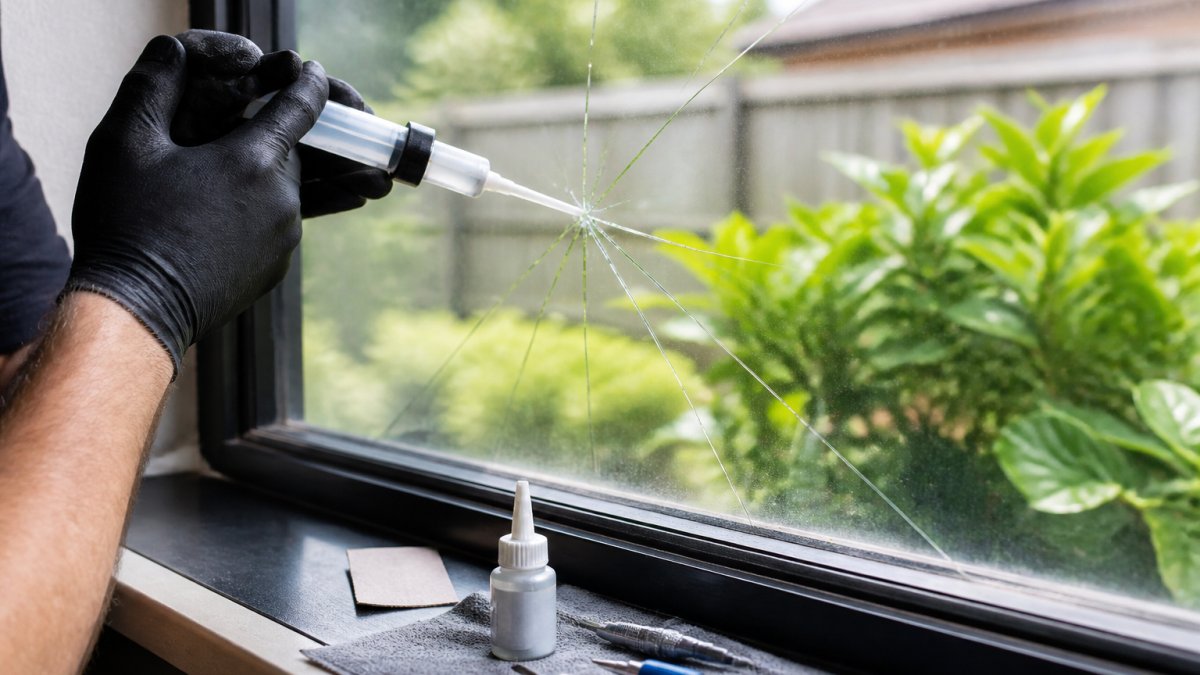
How to Fix Cracked Window Glass: A Step-by-Step Guide
Table of Contents
- When to Repair vs Replace Cracked Window Glass
- When to Replace Cracked Window Glass Instead
- What You'll Need: Tools and Materials
- How to Repair a Hairline Crack in Glass
- Temporary Fix for Cracked Window Glass
- Common Mistakes to Avoid
- When to Call a Professional Glazier
- Frequently Asked Questions
Last Updated: October 11, 2026
When to Repair vs Replace Cracked Window Glass
The decision to fix cracked window glass through repair or replacement depends on crack size, location, and safety risk. Small hairline cracks under 30 centimetres may be repairable; larger cracks, deep splits, or edge damage usually require full replacement. At Mr Glass Services, we assess each crack to guide homeowners toward the right choice.
Assessing crack size and location
Hairline cracks under 10 centimetres respond well to repair resin. Cracks between 10 and 30 centimetres may be repairable depending on pattern. Long cracks, spider web patterns, or damage touching the frame almost always need replacement.
Cracks near edges weaken structural integrity and are harder to repair. Cracks in the centre are easier to stabilise. If the crack runs into the glazing, repair becomes risky.
Check whether damage affects one pane or multiple layers. If only the interior pane is cracked, repair may work. If the exterior pane is damaged, replacement is safer.
Safety considerations before you start
Never attempt repair without proper protection. Cracked glass can shatter suddenly. Safety gloves rated for broken glass and eye protection are essential.
Assess immediate safety risk. Glass that's visibly loose, has missing pieces, or shows signs of spreading requires emergency stabilisation. Broken glass in doors or low windows is more dangerous than high wall damage.
Temperature changes can cause cracks to expand. Cold snaps and hot days both stress glass, so timing matters.
When to Replace Cracked Window Glass Instead
Full replacement is the better choice in several situations. However, understanding why your glass cracked is equally important, it prevents the same damage recurring in a new pane.
Replacement scenarios
Cracks longer than 30 centimetres rarely hold after repair. Multiple cracks indicate structural failure. Warped, discoloured, or seal-failed panes need replacement.
Double-glazed windows with cracked exterior panes must be replaced as a sealed unit. Laminated glass also requires full replacement when cracked.
If you're replacing one pane frequently, upgrading to modern double glazing often makes financial sense and reduces energy costs.
Consider replacement if the frame is bent or rotted. Professional assessment clarifies whether the frame is salvageable.
Diagnosing the root cause of the crack
Before replacing glass, identify what caused the damage. Replacing the pane without addressing the underlying issue means the new glass will crack the same way.
Impact damage creates a star or bullseye pattern. Impact cracks are usually confined to one pane and don't indicate a systemic problem.
Thermal stress occurs when temperature differences create uneven expansion. Thermal cracks often run from edge to centre and may appear days or weeks after temperature change.
Frame pressure or movement causes gradual cracks, multiple cracks, or cracks parallel to the frame edge.
Seal failure in double-glazed units causes internal condensation and cracking. Seal failure requires replacement of the entire sealed unit.
Addressing the cause before replacing
Once you've identified the root cause, take corrective action:
- For thermal stress: Install external shading, improve ventilation, or apply reflective film to reduce temperature extremes.
- For frame movement: Have a surveyor inspect the frame and building. Repairs may include re-shimming, caulking, or structural reinforcement.
- For seal failure: Replace with a new double-glazed unit and ensure proper installation with correct spacing and ventilation.
- For impact: Simply replace the pane; no additional action needed unless the location is high-risk (consider upgrading to laminated or tempered glass in doors or low windows).
Skipping this diagnosis step is why some homeowners experience repeated cracks in the same window. A professional glazier can often identify the cause during assessment and recommend preventive measures alongside replacement.
What You'll Need: Tools and Materials
Repairing a hairline crack in glass requires basic supplies. Gather these before starting:
Safety equipment:
- Safety gloves (heavy-duty, rated for broken glass)
- Eye protection (safety glasses or goggles)
- Dust mask (to avoid inhaling glass particles)
Cleaning supplies:
- Isopropyl alcohol or acetone
- Clean lint-free cloth or paper towels
- Small brush or applicator
Repair materials:
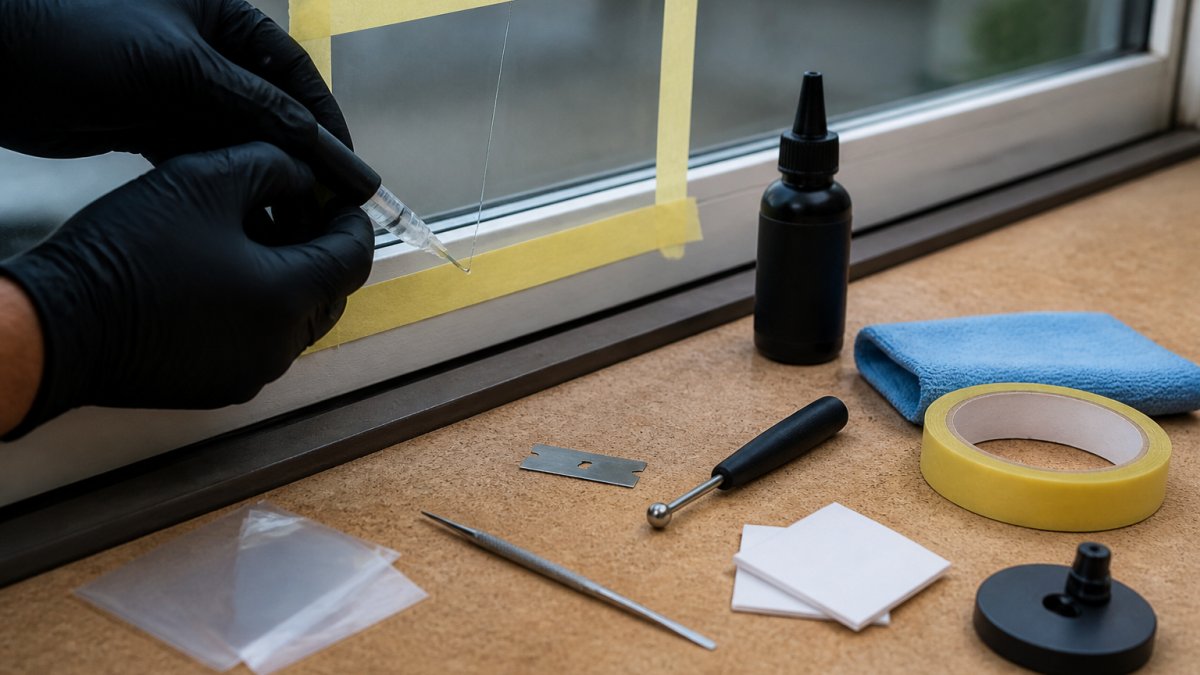
- Glass repair resin or epoxy (clear, UV-curing type works best)
- Masking tape
- Razor blade or utility knife
- Small applicator or syringe (often included with repair kits)
Optional but helpful:
- UV lamp (if using UV-curing resin)
- Protective plastic sheeting
- Drop cloth or old newspaper
Most glass repair kits combine the resin, applicator, and instructions in one package. These work well for hairline cracks.
How to Repair a Hairline Crack in Glass
Repairing a hairline crack requires clean preparation, correct application, and patience during curing. The process takes 2-3 hours, mostly waiting for resin to cure.
Step 1: Clean and prepare the surface
Start with thorough cleaning. Dust, dirt, and oils prevent resin bonding. Use isopropyl alcohol or acetone on a lint-free cloth, wiping until clean.
Dry the glass completely. Let alcohol evaporate fully, usually 5-10 minutes.
Apply masking tape on both sides of the crack, about 2 centimetres away. Press firmly so resin doesn't seep underneath.
If the crack is deep or wide, gently clean out loose debris with a razor blade. Remove any loose glass fragments.
Step 2: Apply the repair resin or epoxy
Read the resin instructions carefully. Different products have different mixing ratios and application methods.
Apply resin slowly into the crack using the included applicator. Fill completely, working end to end. Resin should slightly overfill; excess can be cleaned later.
Work in thin coats, allowing each to partially cure (2-5 minutes) before adding the next. Multiple thin coats create stronger bonds.
If using UV-curing resin, position the UV lamp over the repair area. Most UV resins cure in 5-15 minutes. Follow product instructions for exact timing.
For standard epoxy resin, most products reach initial set in 1-2 hours.
Step 3: Allow proper curing time
Patience is critical. Even if resin feels hard, it's still curing internally. Rushing causes failure.
Most glass repair resins cure fully in 24 hours; some faster products cure in 12 hours. Do not disturb the window during curing.
Once cured, remove masking tape. Scrape excess resin with a razor blade. Clean and dry thoroughly.
The repaired crack should be nearly invisible. The glass pane is structurally sound and waterproof.
Temporary Fix for Cracked Window Glass
Clear packing tape provides immediate waterproofing but doesn't restore structural strength. It's visible and temporary only.
Plastic sheeting and duct tape create a weatherproof barrier for larger cracks. This works for days to weeks but looks temporary.
Super glue can stabilise hairline cracks temporarily but won't hold under stress or temperature changes.
Windscreen repair kits work on household glass. They're stronger than tape but weaker than professional repair.
None of these are permanent solutions. They buy time while you arrange professional repair.
Common Mistakes to Avoid
Understanding what goes wrong helps you succeed. Here are the most frequent errors homeowners make when attempting to fix cracked window glass.
Application and preparation errors
Skipping surface cleaning is the leading cause of repair failure. Dust and oils create a barrier between resin and glass.
Applying resin too thickly causes uneven curing and weak repairs. Apply thin coats, allowing each to partially set before adding the next.
Not waiting long enough for curing weakens the bond. Wait the full time recommended by the product, typically 24 hours for standard epoxy.
Using the wrong resin type causes problems. Check that your product suits your glass type and environmental conditions.
Attempting repair on unsafe cracks puts you at risk.
Ignoring the underlying cause means the crack returns. Always identify and address the root cause.
Realistic repair outcomes and durability
Visibility: Even a perfect repair leaves a visible line. Light may catch the repair from certain angles. If appearance matters, this may be unacceptable.
Structural strength: A repaired hairline crack regains a significant portion of its original strength.
Weather resistance: A properly cured resin repair is waterproof. Over time, UV exposure and temperature cycling can cause yellowing or micro-cracks, affecting appearance.
Durability timeline: Most DIY repairs offer a shorter lifespan compared to professional repairs or full replacement.
Thermal performance: A repaired crack does not restore insulation value in double-glazed windows. Replacement is necessary for full thermal performance.
Cost, time, and professional comparison
DIY repair: $15-$40 material cost; 2-3 hours plus 24-hour curing. Best for small hairline cracks in accessible, non-critical windows. Durability: 3-7 years.
Professional repair: $150-$400; 1-2 hours on-site. Best for cracks 10-30 centimetres or valuable windows. Durability: 10-15 years.
Full pane replacement: $200-$600 for single pane; $400-$1,200 for double-glazed units. Best for cracks longer than 30 centimetres or double-glazed units. Durability: 10-25 years.
Decision framework:
- Hairline crack, non-critical window, tight budget → DIY repair
- Hairline to moderate crack, valuable window, appearance matters → Professional repair
- Large crack, double glazing, safety concern, or long-term durability needed → Full replacement
If you've attempted repair and it failed, do not try again. A professional can assess what went wrong and provide a permanent solution. At Mr Glass Services, we handle emergency glass damage quickly.
When to Call a Professional Glazier
Some situations demand professional help. Recognising when to call saves time, money, and safety risks.
Call a professional glazier if the crack is longer than 30 centimetres.
Double-glazed windows with cracked panes require professional replacement. The sealed unit must be replaced as a whole.
If the window frame is damaged, bent, or rotted, professional repair is necessary.
Laminated glass (common in bathrooms and safety applications) should be professionally replaced when cracked. DIY repair on laminated glass is unreliable.
If you've attempted repair and it failed, don't try again.
At Mr Glass Services, we handle emergency glass damage quickly.
Frequently Asked Questions
Can cracked window glass be repaired?
Yes, hairline and small cracks in window glass can often be repaired using epoxy resin or glass adhesive. However, repair success depends on crack size, location, and glass type. Cracks longer than 30 cm, those near the edge of the pane, or damage to double-glazed or laminated glass usually require replacement. A professional glazier can assess whether your specific crack is suitable for repair or if replacement is the safer choice.
What can I put over cracked window glass as a temporary fix?
For a temporary fix, use clear packing tape on both sides of the window, or apply a temporary window repair patch kit available from hardware suppliers. For larger damage, cover the area with plywood or sturdy plastic sheeting secured with masking tape. These solutions stabilise the crack and reduce drafts until permanent repair or replacement can be arranged. Always prioritise safety by wearing gloves and eye protection when handling cracked glass.
How can I fix a hairline crack in glass safely?
Start by cleaning the crack thoroughly with isopropyl alcohol and letting it dry completely. Wear safety gloves and eye protection throughout. Apply glass repair resin or epoxy along the crack using a small applicator, working in thin coats. Allow the recommended curing time (typically 24 hours) before exposing the repair to weather or temperature changes. Avoid disturbing the repair during curing, and inspect it regularly for any signs of the crack reopening, especially after temperature fluctuations or impact.
When does cracked window glass need to be replaced?
Replace window glass if the crack is longer than 30 cm, located near the edge of the pane, affects double-glazed or laminated glass units, or if the glass is visibly bowed or unstable. Cracks from impact damage or thermal stress affecting structural integrity also warrant replacement. If the repair resin fails to hold after curing or the crack continues to spread, replacement is the only safe option. Professional assessment ensures your safety and the long-term performance of your windows.
Cracked window glass doesn't have to mean a lengthy wait for repairs. Small hairline cracks can be stabilised at home with proper technique and patience. But larger damage, safety concerns, or structural issues require professional assessment. Mr Glass Services offers free quotes to evaluate your specific situation and recommend the best approach, whether repair, replacement, or temporary stabilisation. Contact us today for expert guidance on restoring your windows safely.