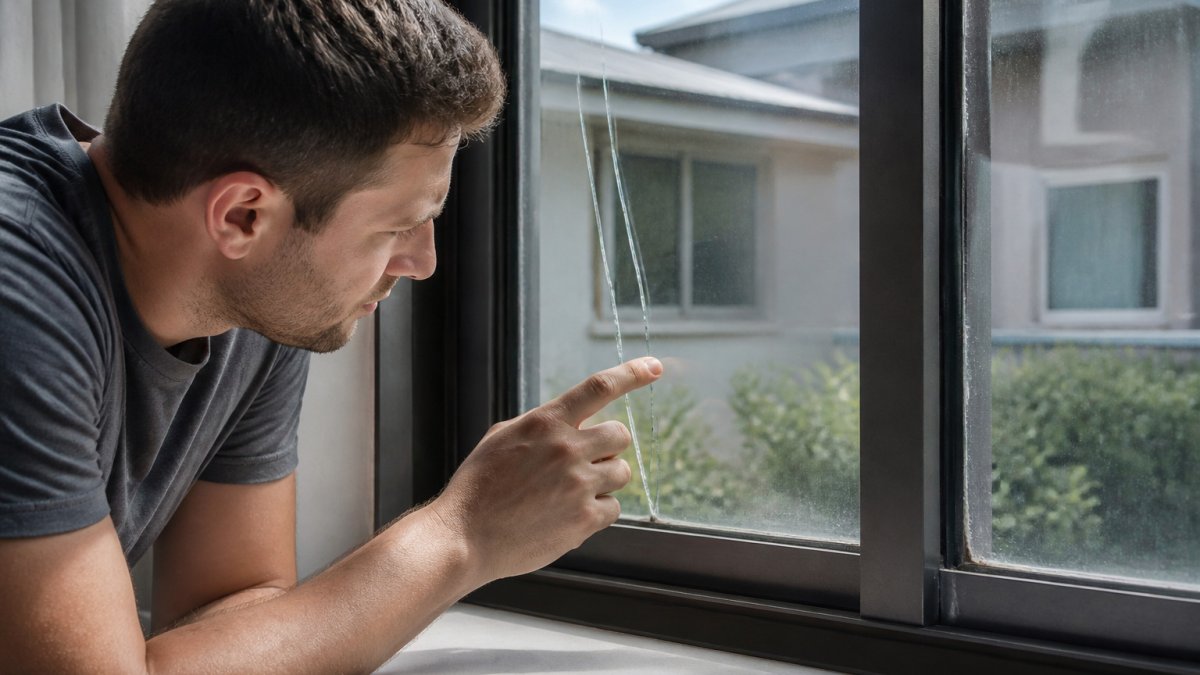
9 Signs Your Glass Needs Replacing Before It Fails
Last Updated: October 30, 2026
Quick Summary
Signs your glass needs replacing include visible cracks or chips, fogging or moisture between double-glazed panes, drafts, rising energy bills and windows or doors that stick, leak or rattle. Cracks running across the glass or reaching the frame usually need the whole pane replaced, while failed sealed units cannot be repaired.
- Any visible crack or chip deserves attention, even if it looks minor.
- Moisture between the panes, not on the room side, signals a failed double-glazing seal.
- A failed sealed unit cannot be dried out or re-gassed, so it must be replaced.
- A candle or tissue held near the frame on a windy day reveals drafts.
- Compare quotes by cost per year of expected service, not the headline price.
Table of Contents
- Why Glass Damage Gets Worse Over Time
- Visible Cracks and Chips in Window Glass
- Failed Double Glazing Signs: Fogging, Condensation and Haze
- Drafts, Rising Energy Bills and Air Leaks
- Doors and Windows That Are Hard to Operate, Leak or Make Noise
- How to Check Your Glass Yourself: A Step-by-Step Assessment
- DIY Versus Professional Glass Replacement: Safety, Cost and Insurance
- Book a Glass Assessment With Mr Glass Services
- Frequently Asked Questions
Cracked, fogged or drafty glass rarely fails overnight, and that slow decline is exactly why the signs your glass needs replacing often get ignored. Small faults in windows and doors can turn into costly, unsafe problems when they are left too long. The signs below are the ones worth acting on early, and this guide explains how to check for them yourself before deciding whether repair or replacement makes sense.
Why Glass Damage Gets Worse Over Time
Glass rarely fails in one dramatic moment. A small chip becomes a crack after a temperature swing, a seal slowly loses its grip, and moisture gets in unnoticed.
Heat, cold and wind all put repeated stress on glass and its frame. Each cycle widens weak points, which is why a chip that looked harmless in winter can spread by summer.
Visible Cracks and Chips in Window Glass
Any visible crack or chip deserves attention, even if it looks minor.
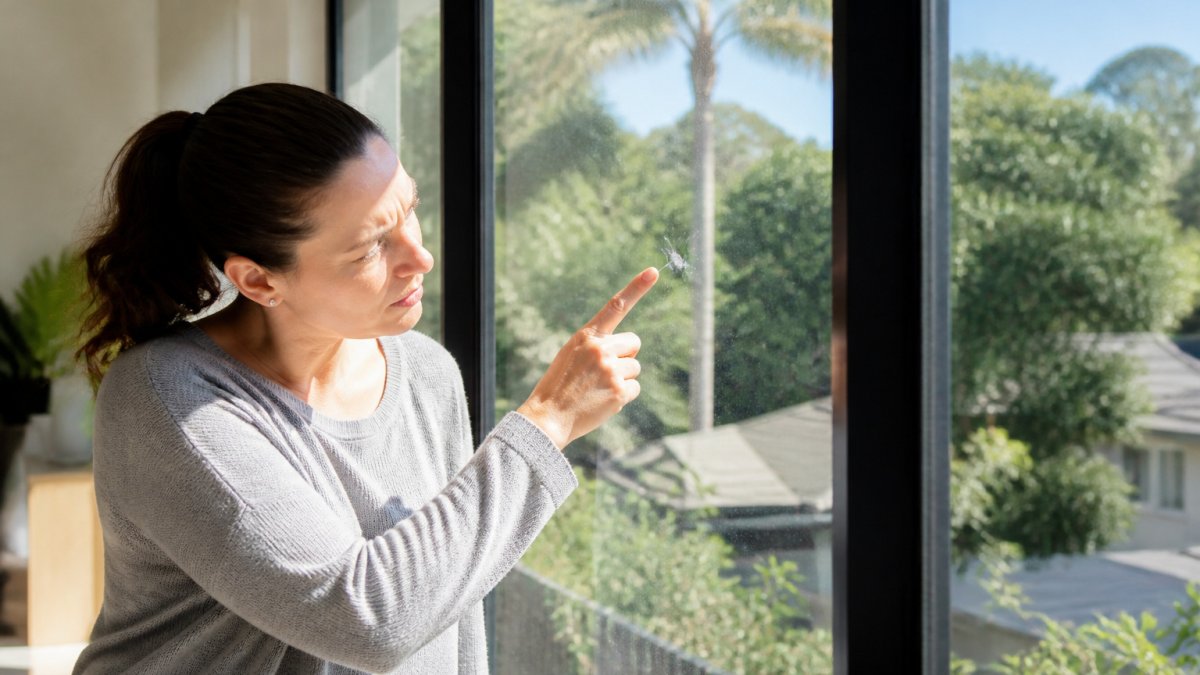
Check for cracks that run across the glass, chips near the edges, and damage that sits in your direct line of sight, since these are among the clearest signs your glass needs replacing. Damage in the centre of a pane is more likely to affect how you see through it.
When a chip can be repaired and when it cannot
A small chip that has not spread, sits away from the edge and is not in the centre of the pane can often be repaired. Our guide on when to fix or replace your glass sets out the decision in more detail. Cracks that are long, reach the frame, or are multiplying usually need the whole pane replaced. If you are unsure, a glazier can assess the damage in person. Our guide on How to Fix Cracked Window Glass: A Step-by-Step Guide walks through the warning signs in more detail.
Failed Double Glazing Signs: Fogging, Condensation and Haze
Double-glazed windows are sealed units: two panes separated by a spacer bar and filled with air or argon, with a primary seal around the edge and a secondary seal holding the whole assembly together. When either seal fails, the unit is no longer sealed, and the gas or dry air inside is gradually replaced by moist outside air. That is why a failed unit fogs from the inside out, and why no amount of wiping will fix it.
How to tell internal from external condensation
Condensation on the room-side surface is normal in cool weather and usually points to ventilation, not glass failure. Condensation on the outside surface can actually be a sign the unit is performing well. The tell-tale sign of a failed seal is moisture between the panes: a foggy patch, a persistent film, or water droplets that appear after a cold night and do not clear when the room warms up.
A simple check: on a dry day, look at the unit from an angle with a torch. If the haze sits behind the glass surface and casts a shadow inside the gap, the seal has failed. You may also see a milky white or grey discolouration where the desiccant in the spacer bar has become saturated.
Why failed units are replaced, not repaired
A failed sealed unit cannot be dried out or re-gassed in situ. The spacer bar and desiccant are inside the assembly, and once the seal is broken the unit will keep drawing in moisture. The exception is where the frame is also damaged or the unit is a non-standard size that is no longer manufactured.
Single, double and triple glazing: different failure signs
The signs differ by glass type, and this is where most generic guides stop short:
- Single glazing cannot fog internally because there is no cavity. Failure shows as cracks, chips, or a frame that no longer seals, letting drafts and water in around the edges.
- Double glazing shows the classic internal fog, haze or water between panes, plus drafts once the perimeter seal fails.
- Triple glazing has two cavities and two sets of seals. A failure in one cavity can be harder to spot because the second pane may still look clear; look for a foggy band on one side of the unit and check both cavities separately.
If you are unsure which type you have, the spacer bar visible around the edge of the glass will show one cavity (double) or two (triple). Recording this before you call a glazier helps them quote accurately.
The signs differ by glass type, and this is where generic guides often stop short:
| Glass type | Typical failure sign | Where to look |
|---|---|---|
| Single glazing | Cracks, chips or a loose frame | Cannot fog internally; check edges for drafts |
| Double glazing | Fog, haze or water between panes | Inside the gap between the two panes |
| Triple glazing | Foggy band on one side of the unit | Check both cavities separately |
Drafts, Rising Energy Bills and Air Leaks
Glass that no longer insulates properly lets heat escape in winter and enter in summer. You may notice a cold draft near a window, or a room that never quite reaches a comfortable temperature.
Many people blame their heating system when the real issue is the glazing. If your energy bills have climbed without a clear reason, the windows and doors are worth checking first. Testing for drafts is easy: hold a lit candle or a strip of tissue near the edge of the frame on a windy day and watch for movement.
Doors and Windows That Are Hard to Operate, Leak or Make Noise
A window that sticks, rattles or is hard to open can point to worn hardware, but it can also mean the glass unit or frame has shifted. Water that collects on sills or runs down the inside of the glass suggests a failed seal or gasket.
Noise is another clue. Glass that no longer fits its frame tightly lets in more street sound, and a noticeable increase in noise after a few years often signals deterioration.
How to Check Your Glass Yourself: A Step-by-Step Assessment
You can run a basic check in about 15 minutes with a torch and a dry day.
- Inspect for cracks and chips. Use a torch held at an angle across the glass to reveal hairline cracks.
- Look between the panes. Check for fog, moisture or film in double-glazed units.
- Test for drafts. On a windy day, hold a lit candle or tissue along the frame edges.
- Operate the window. Open and close it fully to see whether it sticks, rattles or sits unevenly.
- Check the seals and sills. Look for water staining, gaps or cracked sealant.
Record anything you find with photos. This helps a glazier diagnose the problem quickly and gives you a clear picture of what needs doing.
DIY Versus Professional Glass Replacement: Safety, Cost and Insurance
Most guides treat this as a simple 'hire a professional' line. The more useful question is why, and what the numbers actually look like over the life of the glass.
The safety case, not just the warning
Large panes are heavy, and the risk is not only cuts. Glass that is not seated on the correct setting blocks, or that is sealed with the wrong compound, can crack under thermal movement or fail in a wind event.
Lifecycle cost: repair versus replace
A short-term repair can look cheaper, but it is worth comparing the cost per year of service rather than the upfront figure:
- A chip repair on a single pane may last the life of the glass if the damage is stable and away from the edge.
- A failed sealed unit cannot be repaired, so the only options are replacement or living with reduced insulation and rising heating and cooling costs.
- Repeated patch repairs on the same window usually cost more over five to ten years than one correct replacement.
Insurance: when a claim is likely to be covered
Home and contents policies commonly cover accidental glass breakage, but the detail matters. Our page on average window reglazing costs gives a realistic figure to compare against your excess.
Before you claim, check your excess against the quote: for a single small pane, the excess can exceed the repair cost. Keep photos, the glazier's written assessment and the original quote, and ask the glazier to note whether the damage is accidental or deterioration, that wording often decides the claim.
Getting a like-for-like quote
When you request quotes, give the glazier the pane dimensions, the glass type (single, double or triple), the frame material and whether the damage is to the glass or the sealed unit. A quote based on those details is comparable; one based on 'a window' is not.
Book a Glass Assessment With Mr Glass Services
If any of these signs sound familiar, it is worth having the glass looked at before it fails completely. Mr Glass Services is a family-owned business led by a fully qualified glazier, with over 10 years of industry experience across South East Queensland. Book a glass assessment with Mr Glass Services to find out what your windows and doors need.
Frequently Asked Questions
How can I tell if my windows were installed correctly?
Check that the glass sits evenly in the frame with no gaps, that the seals and beads are intact and continuous, and that the window opens and closes smoothly without sticking. Look for water staining on the sill or frame after rain, which can indicate poor flashing or sealing. Drafts felt around the edges, or condensation trapped between panes shortly after installation, also suggest workmanship problems. If you notice any of these, ask a qualified glazier to inspect the installation and confirm the work is covered by the installer's warranty.
Can cracked window glass be repaired, or does it need replacing?
Small chips, particularly at the edges, can sometimes be stabilised, but most cracks in residential window glass cannot be repaired and the pane needs replacing. A crack that runs across the glass, reaches the edge, or is growing should be replaced promptly, as it weakens the pane and can fail without warning. Toughened safety glass that has shattered into small pieces must always be replaced. A glazier can assess the pane and advise whether repair or replacement is the safer option.
How to tell if double glazing has failed?
The most common sign is fogging or condensation between the two panes, which appears when the seal has broken and moisture has entered the cavity. Hazy patches, a film that cannot be wiped away, or water droplets trapped inside the glass all point to seal failure. Failed double glazing loses its insulating value, so you may also notice more drafts and higher heating or cooling costs. Once the seal has failed, the insulated glass unit usually needs replacing rather than cleaning.
Can I replace just the glass on a window?
In many cases you can replace only the glass pane, which is often cheaper than replacing the whole window. This works when the frame is sound, free of rot or corrosion, and the glass size and glazing system are standard. If the frame is damaged or the seals around the frame have failed, replacing the glass alone may not solve the problem. A glazier can check the frame condition and confirm whether a glass-only replacement is suitable. Pricing depends on the glass type, size and access, so contact Mr Glass Services for a quote.